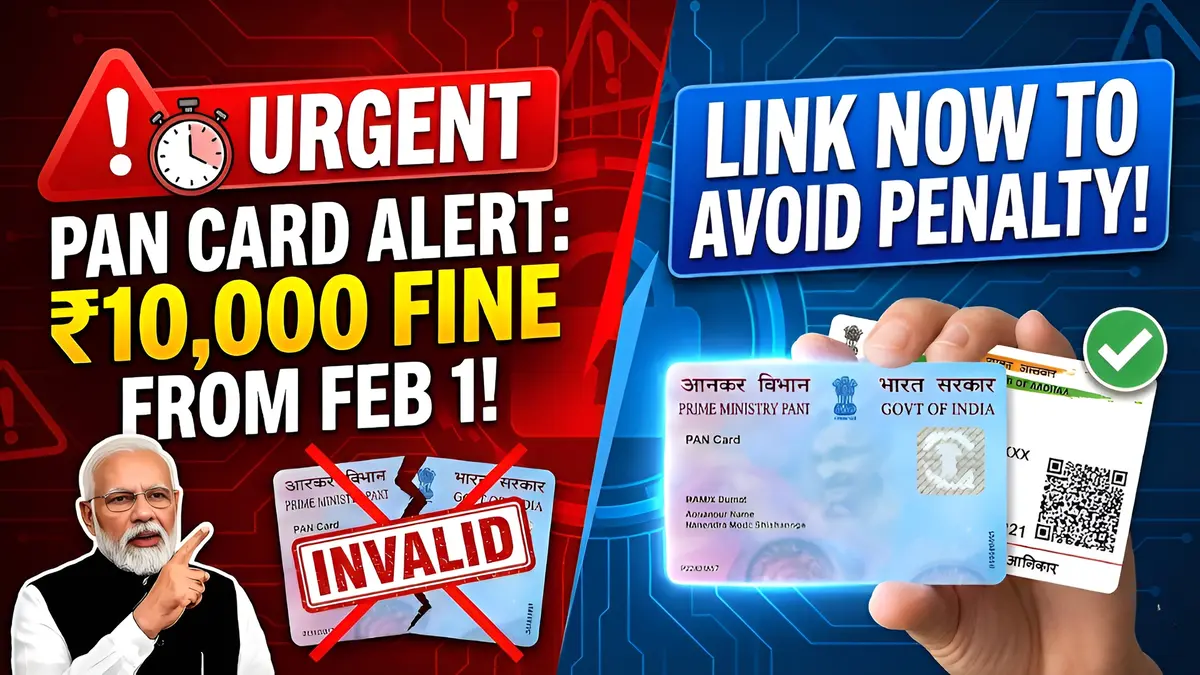
PAN Card New Rule February 2026: A major compliance update linked to PAN cards has officially come into effect in February 2026, and it directly affects millions of taxpayers across India. The government has now activated penalties for individuals who failed to follow mandatory PAN-related requirements within the prescribed deadline. This move is part of a broader push to tighten tax compliance, reduce misuse of PAN cards, and streamline digital verification. If you use a PAN card for banking, investments, or tax filing, this update deserves your immediate attention.
PAN Rules Get Stricter in 2026
The PAN card system has undergone multiple changes over the past few years, but the February 2026 update marks one of the strictest enforcement phases so far. The Income Tax Department has made it clear that non-compliance will no longer be ignored. PAN cards that do not meet the updated requirements are now facing penalties and restricted usage. This step aims to ensure that every PAN holder is properly verified and traceable under the tax system.
February One Triggers Penalty Action
From February 1, 2026, a financial penalty becomes applicable for PAN holders who failed to comply with mandatory rules within the earlier deadline. The most common issue triggering this fine is non-linking of PAN with Aadhaar. Once the penalty window opens, affected individuals must pay a prescribed fine to restore the full functionality of their PAN card. Without paying the fine, the PAN remains unusable for key financial activities.
Unlinked PAN Cards Face Trouble
PAN cards that are not linked with Aadhaar have now been marked as inoperative. An inoperative PAN cannot be used for filing income tax returns, opening new bank accounts, or making high-value financial transactions. This restriction is automatic and system-driven, meaning manual intervention is not possible unless the required compliance is completed. Many users only realize this problem when a transaction suddenly fails or gets rejected.
Who Will Be Directly Affected
The new rule impacts salaried employees, self-employed professionals, business owners, traders, and investors. Anyone who uses PAN for income reporting, tax deductions, or financial verification falls under this rule. Even individuals with low or no taxable income can be affected if their PAN is inactive. Students, retirees, and occasional investors are also advised to check their PAN status to avoid last-minute issues.
Financial Activities That Get Blocked
Once a PAN becomes inoperative, several everyday financial activities come to a halt. Filing an income tax return becomes impossible, tax refunds may get delayed, and banks may refuse account-related services. Investment platforms can restrict trading or redemption, and loan applications may get rejected instantly. In some cases, higher TDS may be deducted because the PAN is not considered valid by the system.
How to Reactivate Your PAN
Reactivating an inoperative PAN is possible but requires timely action. The PAN holder must complete the required compliance, usually PAN-Aadhaar linking, through the official income tax portal. After submitting the details, a penalty fee must be paid online. Once the process is successfully completed, the PAN status is restored to operative, allowing normal financial usage to resume.
Why Government Is Enforcing This Now
The government’s intention behind this strict enforcement is to eliminate duplicate PAN cards, prevent identity misuse, and improve tax transparency. Linking PAN with Aadhaar helps authorities track financial transactions more accurately and reduce tax evasion. With digital systems becoming more advanced, the government is now in a position to enforce rules that were earlier ignored or loosely implemented.
Common Myths Around PAN Penalty
Many people believe that penalties apply only to high-income individuals or those actively filing taxes. This is incorrect. The rule applies uniformly to all PAN holders, regardless of income level. Another misconception is that the penalty is optional or can be avoided later. In reality, without paying the fine and completing compliance, the PAN remains inactive indefinitely.
Special Note for Certain Categories
Some categories such as Non-Resident Indians and individuals not eligible for Aadhaar may have different compliance requirements. However, they must ensure their PAN status is correctly updated as per applicable exemptions. Ignoring verification can still lead to operational issues. It is always advisable for such individuals to verify their status through official channels or consult a tax expert.
Why Ignoring This Can Cost More
Delaying PAN compliance can lead to more than just a one-time fine. Higher tax deductions, missed refunds, blocked investments, and repeated transaction failures can cause long-term financial inconvenience. In some cases, resolving these issues later can take weeks, especially during peak tax seasons. Early action helps avoid unnecessary stress and financial loss.
Simple Steps to Stay Safe
Checking PAN status online takes only a few minutes. Ensuring that personal details on PAN and Aadhaar match perfectly can prevent linking errors. Keeping your registered mobile number active is also essential for OTP verification. Completing these small steps now can save you from penalties and disruptions later.
Final Word: PAN Card New Rule February 2026
The PAN Card New Rule of February 2026 is a clear signal that tax compliance is no longer optional. With penalties now active from February 1, ignoring PAN requirements can directly impact your financial life. The safest approach is to verify your PAN status immediately and complete any pending compliance without delay. Staying updated and compliant ensures smooth access to banking, investments, and tax-related services in the future.
